Spaghetti Carbonara (the Roman Way)
Classic Roman carbonara — no cream, ever. Just eggs, Pecorino, crispy guanciale, and black pepper whipped into a silky, glossy sauce that clings to every strand.
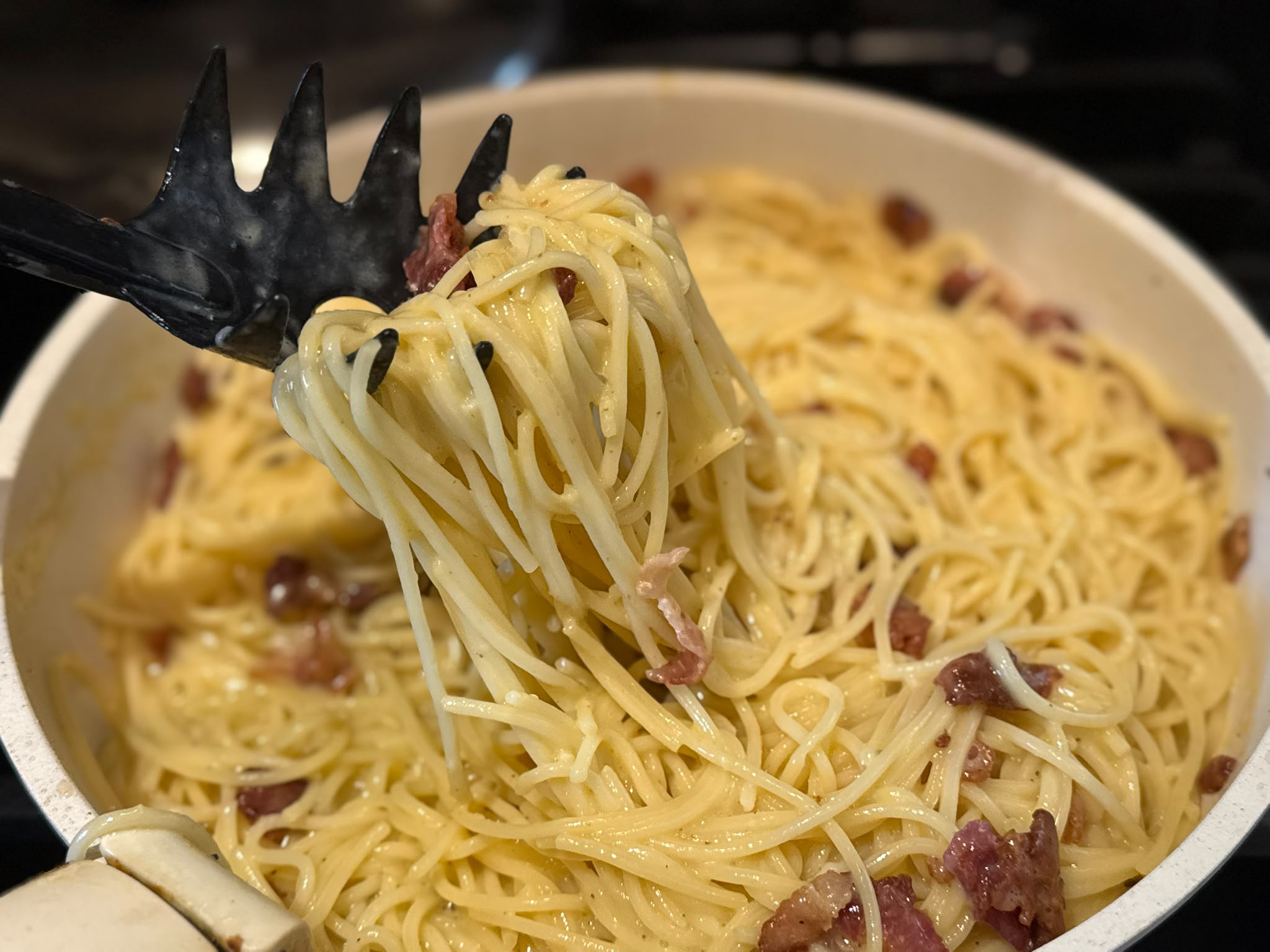
Carbonara is one of those dishes that looks like nothing and tastes like everything. Four humble ingredients — eggs, hard sheep's cheese, cured pork, and black pepper — and yet the first time you get it right, glossy and silky without a drop of cream, it feels like you've unlocked a secret the Romans have been keeping for a hundred years.
Because that's the thing: real carbonara has no cream. None. The silk comes from eggs and starchy pasta water emulsified together off the heat, whisked fast so the residual warmth of the pasta cooks the egg into a sauce rather than scrambling it into breakfast. The first few times I made it, I was too impatient and left the pan on the burner — and ended up with clumpy pasta and sad little curds. The fix was almost embarrassingly simple: kill the heat, then add the eggs.
We make this one for a crowd. Scaled up to eight, it's become our go-to when the whole family lands at the table hungry and unimpressed by anything fussy. Cook the guanciale until it's crisp and the fat has rendered into golden pools, whisk the eggs and Pecorino into a thick paste with an aggressive amount of pepper, and keep a mug of pasta water close — that starchy water is what turns everything creamy.
Serve it the second it comes together. Carbonara waits for no one, and honestly, neither does anyone at this table.
At a glance
- Prep
- 10 min
- Cook
- 15 min
- Total
- 25 min
- Yield
- 8 servings
- Difficulty
- Medium
Ingredients
- 1 kg spaghetti (or rigatoni)
- 400g bacon (or guanciale/pancetta for the traditional version), diced
- 8 large eggs (4 whole eggs + 4 extra yolks for richness)
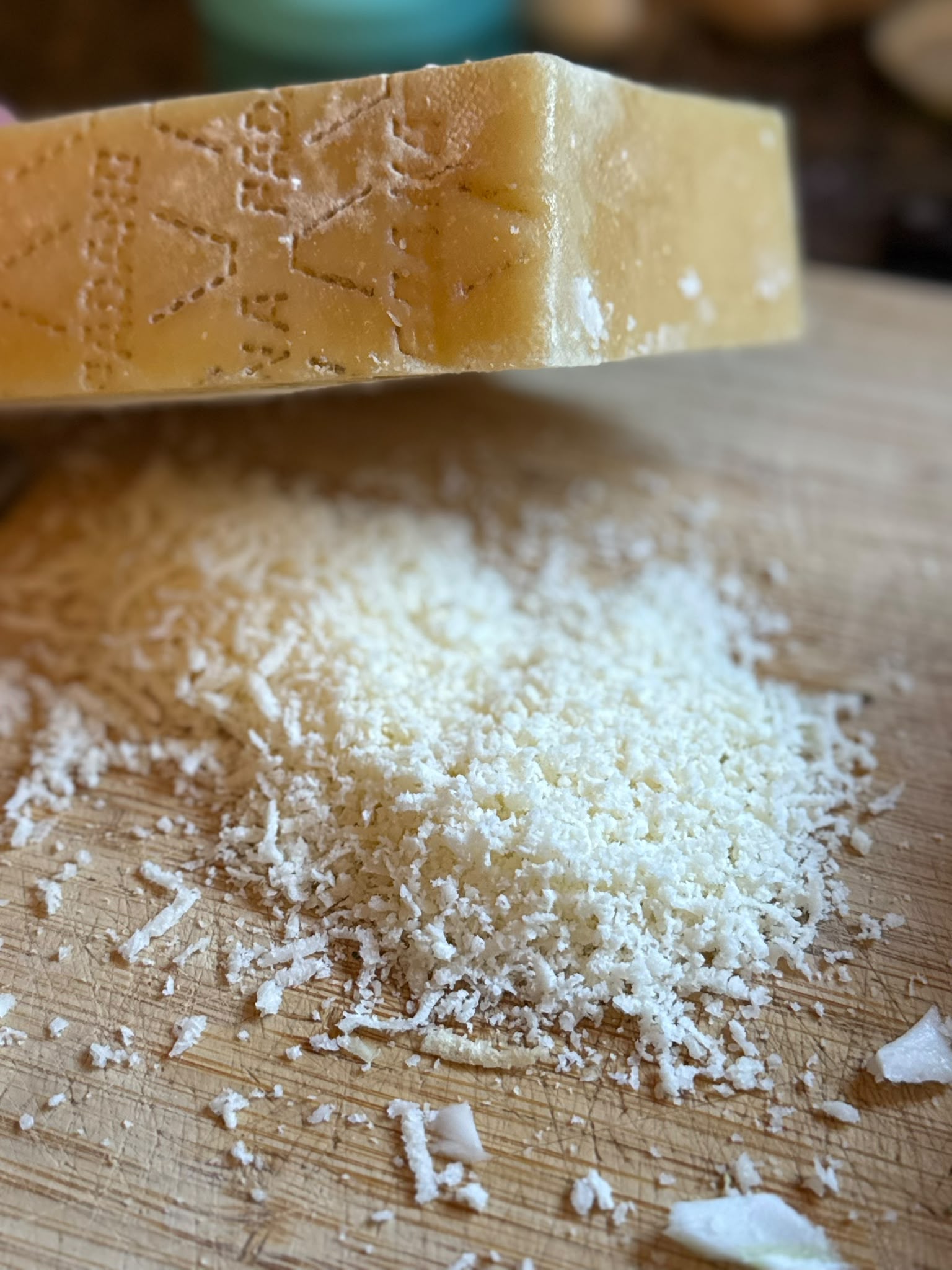
- 200g Parmesan, finely grated (or Pecorino Romano for a sharper, classic flavour)
- Freshly cracked black pepper, and lots of it
- Salt, for the pasta water
Method
-
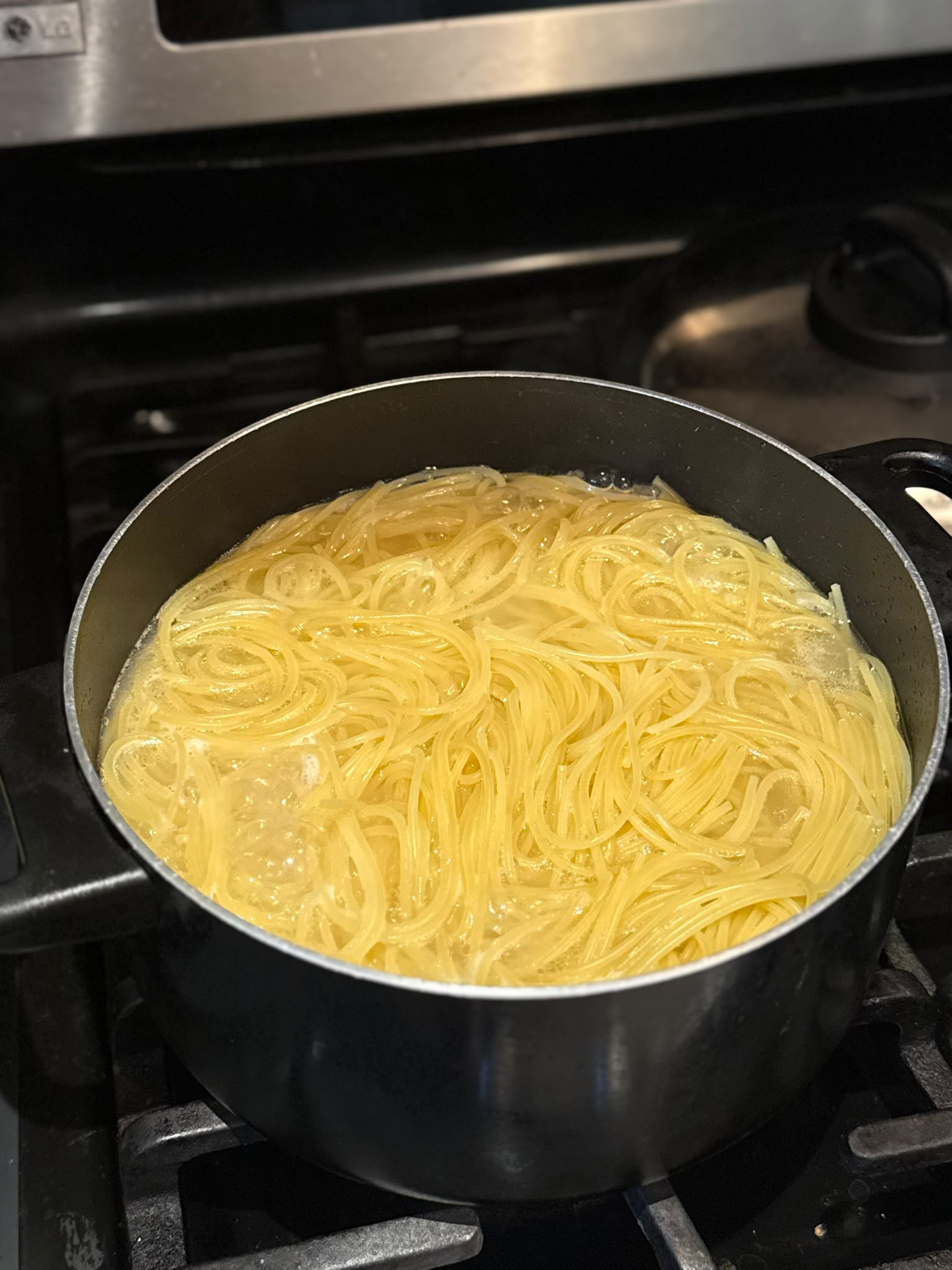
Bring a large pot of well-salted water to a rolling boil and cook the spaghetti until al dente. For this quantity you may want two pots so the pasta has room to move.
-
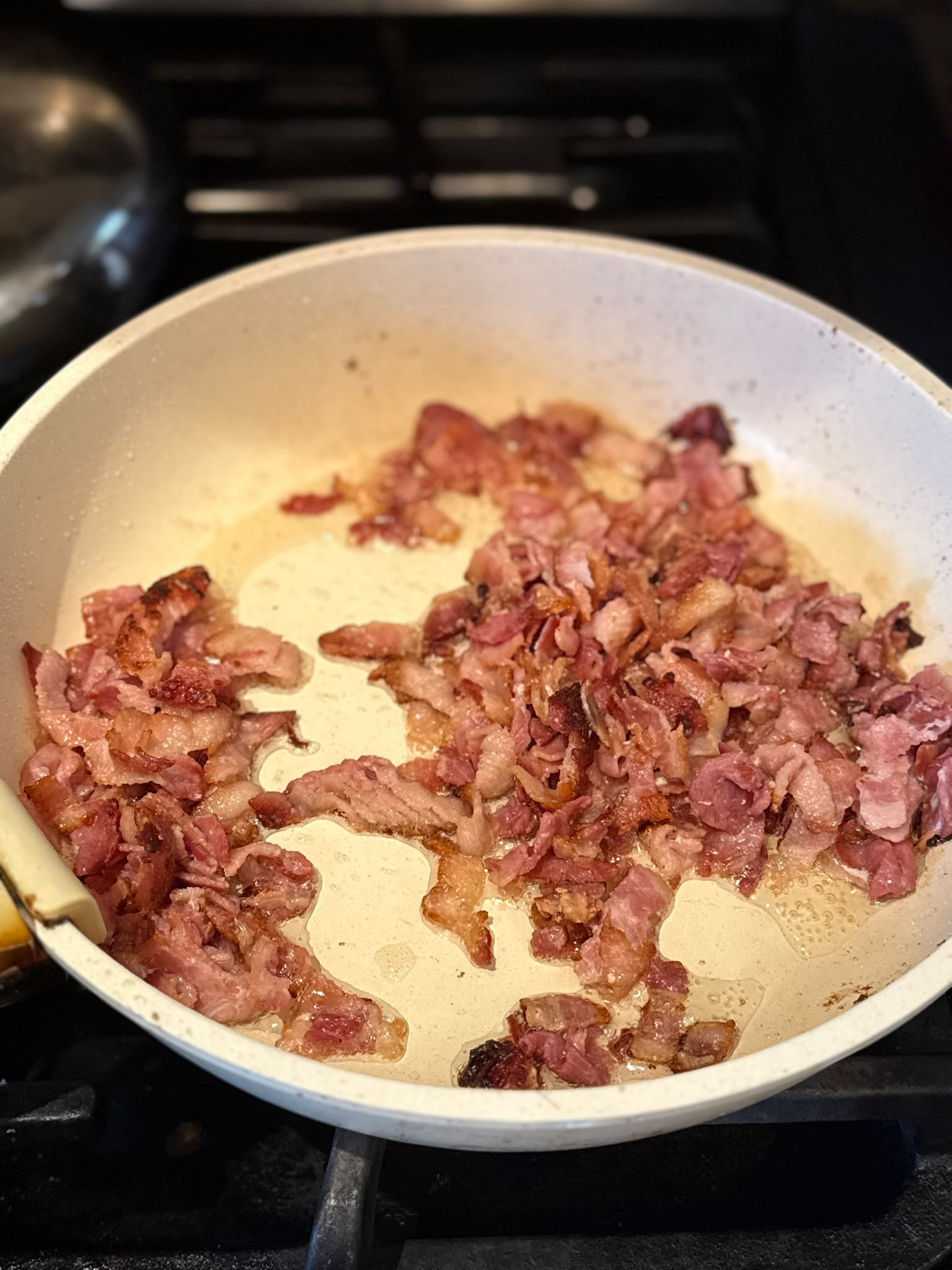
While the pasta cooks, add the diced guanciale to a large cold pan and set it over medium heat. Cook slowly until the fat renders out and the pieces turn crisp and golden, about 8 to 10 minutes. Turn off the heat and leave the rendered fat in the pan.
-
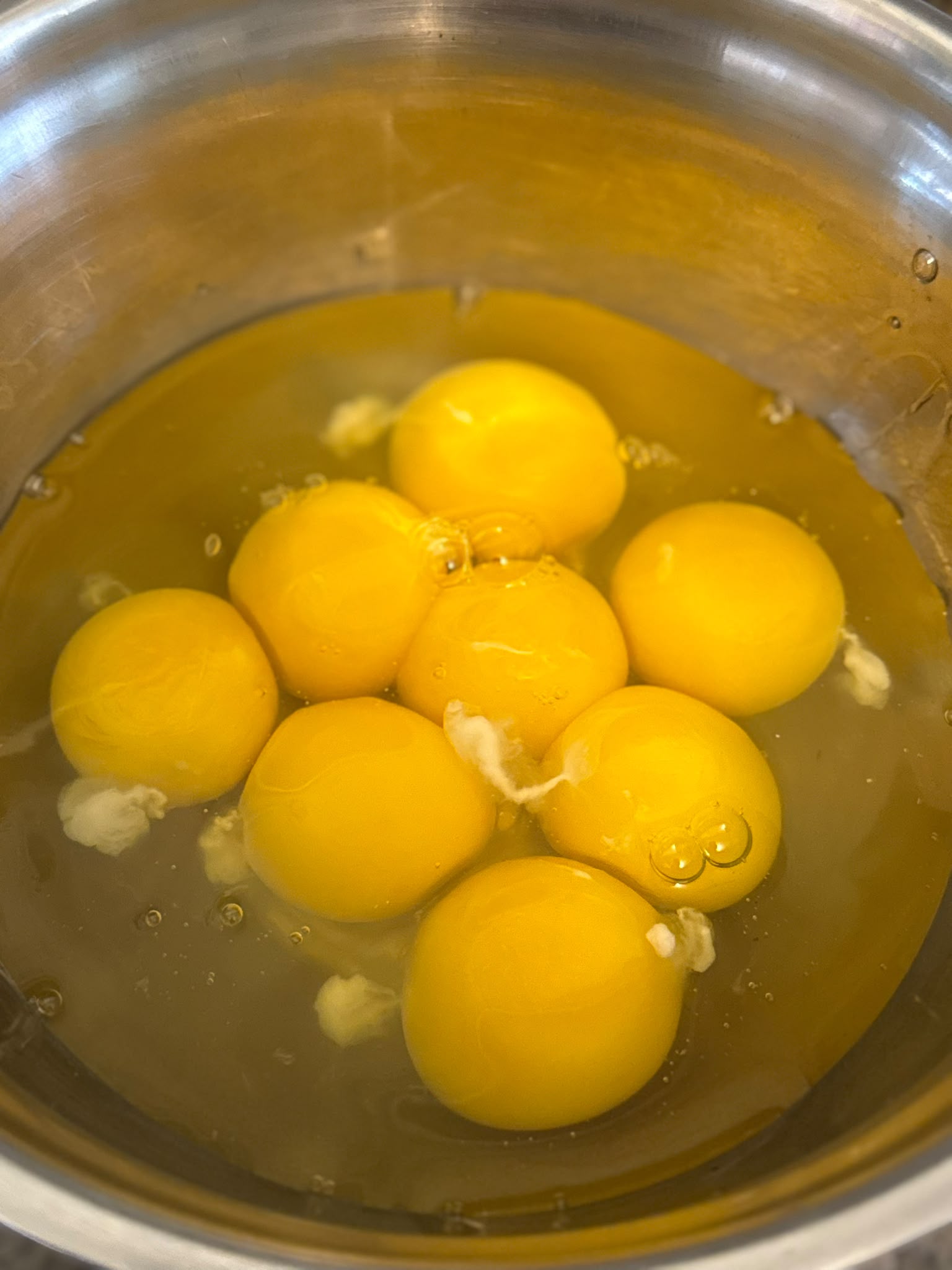
In a bowl, whisk the whole eggs and yolks together with the grated Pecorino and a heavy dose of black pepper until it forms a thick, smooth paste.
-
Just before draining, scoop out about 2 cups of the starchy pasta water and set it aside.
-
Add the drained hot pasta to the pan with the guanciale (heat still OFF) and toss well to coat every strand in the fat.
-
Pour in the egg-and-cheese mixture and toss quickly and constantly, adding splashes of the reserved pasta water a little at a time. The residual heat will cook the eggs into a glossy, silky sauce — keep it moving so it never scrambles.
-
Once the sauce is creamy and clings to the pasta, serve immediately with an extra shower of Pecorino and more black pepper on top.
Photos
Tips & Swaps
- Take the pan OFF the heat before the eggs go in. This is the single most important step — direct heat scrambles the eggs instead of turning them into sauce.
- Save that starchy pasta water. It's what makes carbonara creamy without a drop of cream — add it gradually until the sauce is glossy and loose.
- Bacon is the easy, budget-friendly choice and works beautifully — it just adds a smokier note than the traditional guanciale or pancetta. Whichever you use, start it in a cold pan so the fat renders gently instead of burning.
- Parmesan is milder and nuttier and easy to find; Pecorino Romano is sharper and saltier if you want the classic Roman punch. Either melts into a lovely sauce.
- Work fast and serve right away — carbonara stiffens as it sits, so have everyone seated before you toss.
- For an even richer sauce, lean on more yolks than whole eggs. The extra yolks are the luxury.
Nutrition
Per serving · 1 serving
- Calories
- 610 kcal
- Fat
- 28 g
- Saturated fat
- 11 g
- Cholesterol
- 220 mg
- Sodium
- 720 mg
- Carbs
- 62 g
- Protein
- 26 g
Estimated values, calculated per serving. Actual nutrition varies with ingredients and portion sizes.